
What Is a Court Docket in Brantley County
A court docket is the running list of case events. It may show the case number, party names, filing date, judge, hearing dates, motions, orders, continuances, plea events, disposition entries, judgment entries, sentence entries, and appeal activity. It is different from the full case record. The docket tells a reader what happened and when; the full case file contains the pleadings, orders, notices, exhibits when available, and certified copies maintained by the clerk.
In Brantley County, the docket route follows Georgia's court structure. Superior Court is the trial court of general jurisdiction and handles felonies, divorce, title-to-land matters, equity, and broad civil and criminal cases. Probate Court handles estates, wills, guardianships, marriage, vital-record office functions, and related probate proceedings. Magistrate Court handles warrants, first appearances, smaller civil claims, dispossessory matters, ordinance matters, and deposit-account fraud proceedings. Nahunta Municipal Court handles applicable city ordinance and traffic matters.
How to Find Brantley County Dockets Online
There is no single Brantley County public docket portal covering every local court. For Superior Court case activity, try Georgia Courts e-access and re:SearchGA, then contact the Clerk of Superior Court if the case is not available online. For probate calendars and probate-related searches, try Georgia Probate Records, especially the hearing and estate modules. For Magistrate Court and municipal matters, use the court listed on the notice, citation, or summons.
- Identify the court from the notice, citation, warrant, pleading, or case caption.
- Try the statewide online route for the case type, such as e-access, re:SearchGA, or Georgia Probate Records.
- Search by party name, case number, county, and date range where the portal exposes those fields.
- Read the docket entries for hearing dates, event descriptions, dispositions, and status, then request the full file from the court if documents are needed.
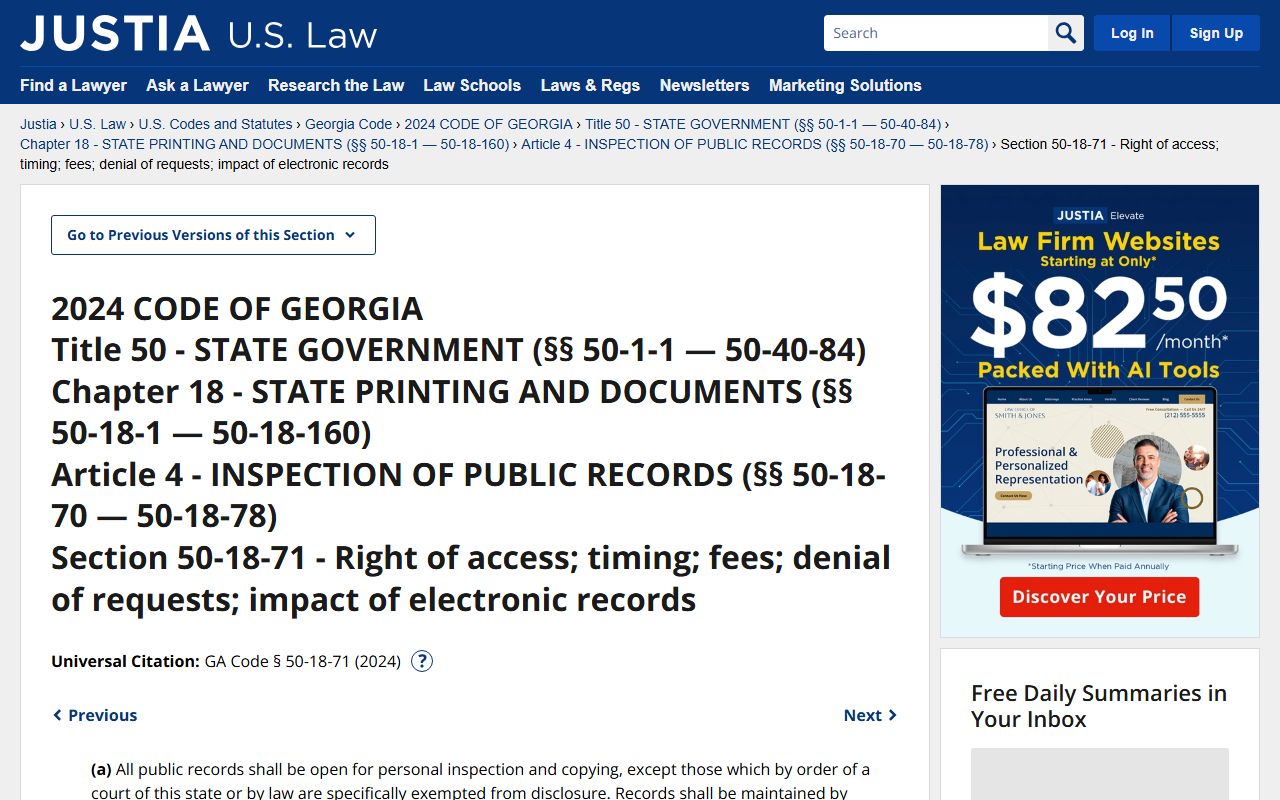
O.C.G.A. 50-18-71 addresses inspection, copying, timing, and lawful costs for public records.
Brantley County Docket and Hearing Fields
Docket fields are smaller than full case-record fields. A docket usually summarizes activity rather than displaying every page filed in the case. The research identifies typical Brantley court-record and hearing fields, plus Georgia Probate Records hearing-calendar fields. When a docket has only a brief event label, call the clerk before assuming the legal effect of the entry.
| Field | What It Shows |
|---|---|
| Case Number | The court's identifier for the matter. Brantley format was not published in the county sources. |
| Court / Division | Superior, Probate, Magistrate, Juvenile, or Municipal, depending on the filing court. |
| Entry Date | The date a filing, order, hearing notice, continuance, plea, disposition, sentence, judgment, or appeal was entered. |
| Event Type | A short description such as motion, order, summons, service, hearing notice, continuance, plea, disposition, or judgment. |
| Hearing Date and Time | The scheduled date, time, court, hearing type, and judge where available. |
| Party Names | Plaintiff, defendant, state, petitioner, respondent, decedent, ward, applicant, or another role tied to the case type. |
| Status or Disposition | Whether the case is pending, continued, resolved, dismissed, sentenced, appealed, or otherwise disposed. |
Brantley Court Routes for Dockets
Superior Court docket questions should start with the Clerk of Superior Court when an online provider does not return a result. The clerk's GSCCCA profile lists Debbie Sirmans as Clerk of Superior Court at 234 Brantley Street, Suite 200, P.O. Box 1067, Nahunta, phone 912-462-5635, with office hours of 8:00 a.m. to 5:00 p.m. Monday through Friday. The clerk manages Superior, Juvenile, Jury Management, Child Support Receiver, and Board of Equalization records.
- Superior Court: felony, divorce, title-to-land, equity, broad civil and criminal docket entries, and related motions or orders.
- Probate Court: estate, will, guardianship, conservatorship, marriage, vital-record office, and probate hearing-calendar information.
- Magistrate Court: warrants, first appearances, civil claims generally up to $15,000, dispossessory cases, ordinance proceedings, and preliminary criminal matters.
- Municipal Court: city ordinance and city traffic dockets, including Nahunta matters when the citation or notice names the city court.
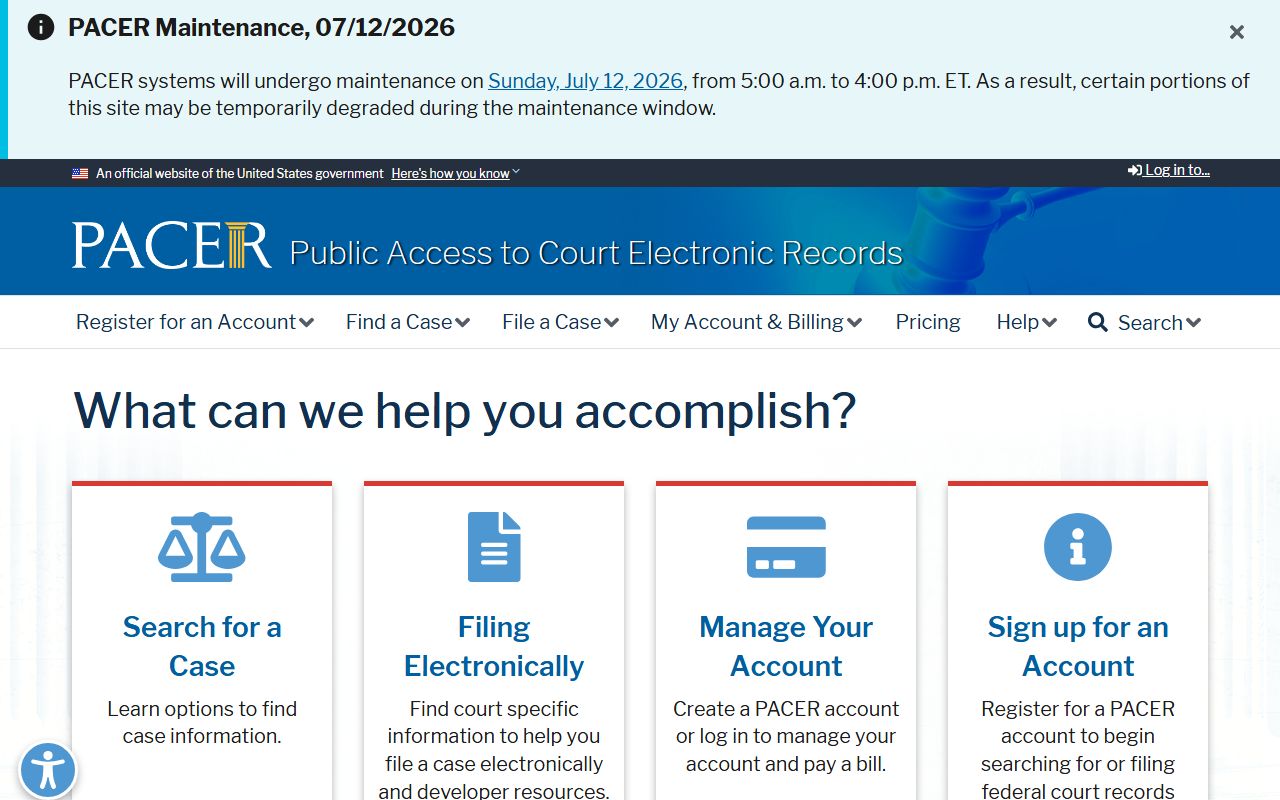
PACER is the federal court records system, not a Brantley County local docket system.
Docket vs. Full Case Record
A docket is useful for tracking the progress of a case, confirming a hearing date, checking whether a disposition has been entered, or deciding which court office to contact. It is not the same thing as a certified judgment, final decree, sentence sheet, indictment, warrant return, or pleading packet. If a reader needs proof for court, licensing, employment, immigration, benefits, property, or another formal purpose, the official copy route is the maintaining clerk or court.
| Docket | Full Case Record | |
|---|---|---|
| Format | Chronological list of events | Documents, pleadings, orders, notices, and certified copies |
| Access | May be online through a provider or available from the court | Often requires clerk request, copy fee, certification request, or in-person inspection |
| Use | Track hearing dates, filings, status, and disposition | Review legal content, prove outcome, or obtain official copies |
| Limits | May omit sealed, restricted, or document-level detail | May contain redactions, sealed sections, restricted exhibits, or confidential records |
Probate and Hearing Calendar Searches
Georgia Probate Records is the clearest public-facing calendar tool identified for probate-related Brantley searches. The portal includes modules for estate information, marriage records, traffic citations, will information, guardianship petitions, hearing searches, miscellaneous filings, weapons carry licensing, filing-cost calculation, and participating court information. The hearing-calendar module uses fields such as county, case name, file date, file time, Search, and Cancel.
For probate records, online availability should be treated as a starting point. Estate and will indexes may be public, but guardianship and conservatorship matters can include protected medical, financial, and minor information. If a hearing result is incomplete, call Brantley Probate Court at 912-462-5192 or visit 234 Brantley Street, Suite 100, Nahunta.
How to Read a Brantley County Docket
Read a docket in sequence, beginning with the filing date and then the entries that follow. A complaint, accusation, indictment, petition, warrant application, or citation starts the matter. Service, summons, notices, bond orders, arraignment entries, and hearing notices show how the case moved forward. Motions and orders show requests and rulings. Continuance entries mean a hearing or deadline was postponed. Disposition, judgment, sentence, dismissal, or appeal entries show the current or final result.
Do not treat a charge entry as a conviction or a scheduled hearing as proof that a hearing occurred. The docket may later show that the hearing was continued, the charge was dismissed, a plea was entered, or the case moved to another stage. For criminal matters, the jail roster can show booking and charge clues, but the final criminal disposition is a court record. For docket entries that are unclear, ask the clerk for the full file or certified disposition.
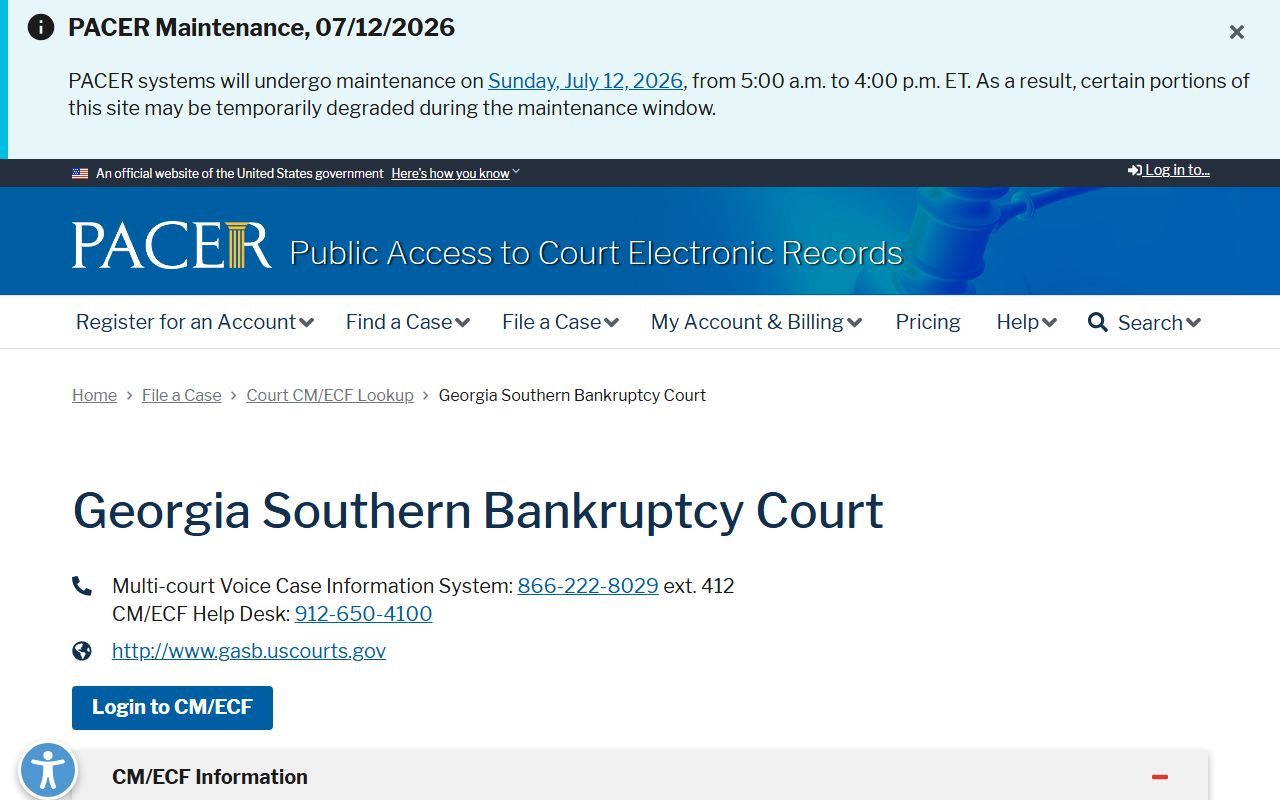
PACER's CM/ECF lookup for the Georgia Southern Bankruptcy Court is useful for bankruptcy dockets connected to the Southern District of Georgia.
Non-Online Docket Request Path
When a docket is not online, make the request to the court that holds the file. For Superior Court, contact the Clerk of Superior Court at 234 Brantley Street, Suite 200, P.O. Box 1067, Nahunta, GA 31553, phone 912-462-5635. For Probate Court, contact 234 Brantley Street, Suite 100, phone 912-462-5192. For Magistrate Court, contact 234 Brantley Street, Suite 300, phone 912-462-6780. Provide the party names, case number if known, record type, approximate date, and whether the request is for a docket printout, hearing date, plain copy, or certified copy.
Georgia public access rules support inspection and copying of non-exempt public records, but dockets may still be limited by sealed orders, juvenile confidentiality, adoption confidentiality, mental-health privacy, active investigations, or redaction rules. If the request involves a sealed or restricted matter, ask the clerk whether a judge's order or proof of party status is required.