
Criminal Court Records in Brantley County
A criminal court record is the case-level court file. It can include an accusation or indictment, warrant references, bond orders, arraignment entries, motions, hearing notices, plea paperwork, trial entries, verdicts, sentencing orders, probation revocation filings, and disposition information. The jail roster may show a current booking and charge table, but the court record is the source for the final case outcome once the court has entered a disposition.
Georgia Superior Court is the primary trial court for felony criminal matters. The research identifies Brantley County Superior Court and Clerk functions at 234 Brantley Street, Suite 200, Nahunta, phone 912-462-5635. Magistrate Court at Suite 300 handles arrest and search warrants, first appearances, preliminary matters, ordinance proceedings, deposit-account fraud matters, and smaller civil jurisdiction. Municipal Court can handle city ordinance and traffic matters. Juvenile delinquency and dependency records are generally restricted and are not open public criminal-record searches.
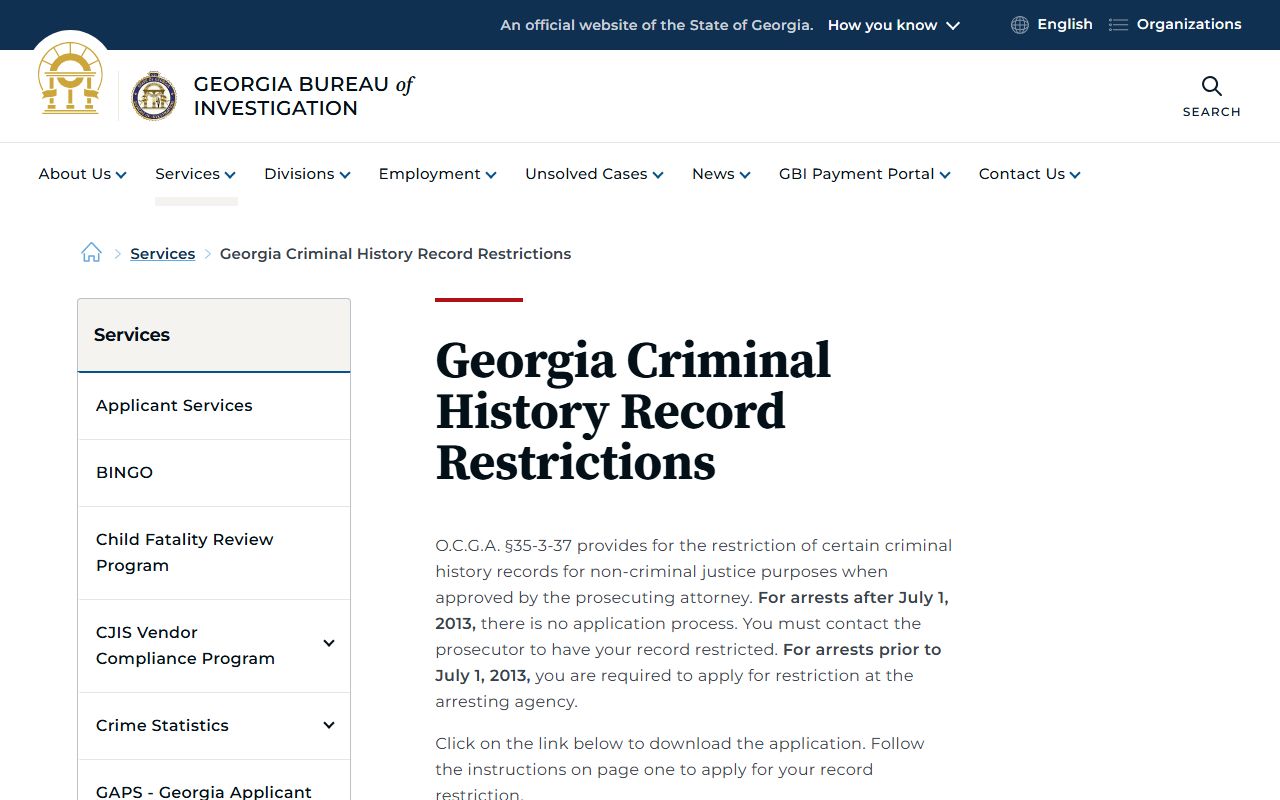
The Georgia Bureau of Investigation explains Georgia criminal history record restrictions under O.C.G.A. 35-3-37.
How to Search Brantley County Criminal Court Records
Brantley County does not publish a county-run public criminal case portal for all local courts. Start with Georgia Courts e-access and re:SearchGA for provider-based case access, then contact the Clerk of Superior Court when an official copy, certified disposition, older file, or non-online record is needed. For warrant or early-stage criminal matters, Magistrate Court may have the initial warrant or first-appearance record, while Superior Court may hold the felony case after formal charging.
- Separate the criminal court case from arrest information. For current custody or booking details, use inmate records; for the final case file, use the court.
- Search statewide case access routes such as e-access or re:SearchGA, if the case is available through the provider and access level.
- Use the defendant name, case number, court, filing year, charge information, and approximate hearing or disposition date to narrow the search.
- If the case is not online, call or visit the Clerk of Superior Court for felony or Superior Court criminal files.
- Ask for a certified disposition or certified copy when the record will be used as proof of the outcome.
State-level criminal history tools are not the same as the court file. The GBI criminal history FAQ and Georgia Felon Search concern criminal history access, while the Brantley court file is maintained by the court that handled the case. A court charge record may explain charges after arrest, and warrant records may explain warrant routes, but the criminal court record is the full case track.
Stages of a Criminal Case
Criminal case files develop in stages. A person may be arrested or cited first, but the full criminal court record becomes meaningful as charges are filed, hearings occur, motions are entered, and the court reaches a disposition. In Brantley County, early warrant and first-appearance records may involve Magistrate Court, while felony prosecution and Superior Court case events involve the Clerk of Superior Court and the Waycross Judicial Circuit prosecutor.
Case flow: Arrest or Warrant › First Appearance › Formal Charge › Arraignment › Pretrial Motions › Plea or Trial › Disposition › Sentencing or Revocation
| Stage | What Happens |
|---|---|
| Arrest or Warrant | Law enforcement action may create booking, warrant, and jail roster information, but that is not the final court case file. |
| First Appearance | Magistrate Court may address early appearance, bond, warrant, or preliminary issues. |
| Formal Charge | The prosecutor may file an accusation or seek an indictment for a Superior Court criminal case. |
| Arraignment | The defendant is formally called to answer the charge and enter or address a plea stage. |
| Pretrial / Motions | Parties file requests, objections, discovery-related motions, or other pretrial matters for court ruling. |
| Plea or Trial | The case may resolve by plea or proceed to trial, where verdict entries may appear. |
| Disposition and Sentencing | The record shows the outcome and any sentence, probation, restitution, costs, or revocation activity. |
What a Brantley County Criminal Court Record Shows
The research identifies typical criminal case fields rather than a publicly inspectable Brantley Superior Court sample case. A criminal court record may include the court and division, case number, filing date, judge, defendant, attorney, prosecutor, charges, statute references, warrant number, count, misdemeanor or felony classification, docket events, hearings, plea, disposition, sentence, bond, restitution, costs, and redactions. The clerk remains the authoritative source for certified copies.
| Field | What It Shows |
|---|---|
| Case Number | The court file identifier. Provide it exactly when requesting a copy or disposition. |
| Defendant | The person charged in the court case, distinct from a jail roster's current custody status. |
| Charges | Statute, count, description, misdemeanor or felony classification, warrant number, or related court reference. |
| Attorney and Prosecutor | Defense counsel or public defender information and prosecutor involvement where recorded. |
| Hearing Entries | Date, time, court, hearing type, judge, continuance, or appearance-related activity. |
| Plea | The defendant's formal answer to a charge, such as a plea stage or plea resolution. |
| Disposition | The current or final outcome, such as dismissed, guilty plea, verdict, sentence, or other case result. |
| Sentence | Punishment after conviction, which may include custody, probation, restitution, fines, costs, or revocation terms. |
| Redactions | Protected identifiers, minor information, sealed material, restricted juvenile content, and sensitive addresses may be omitted. |
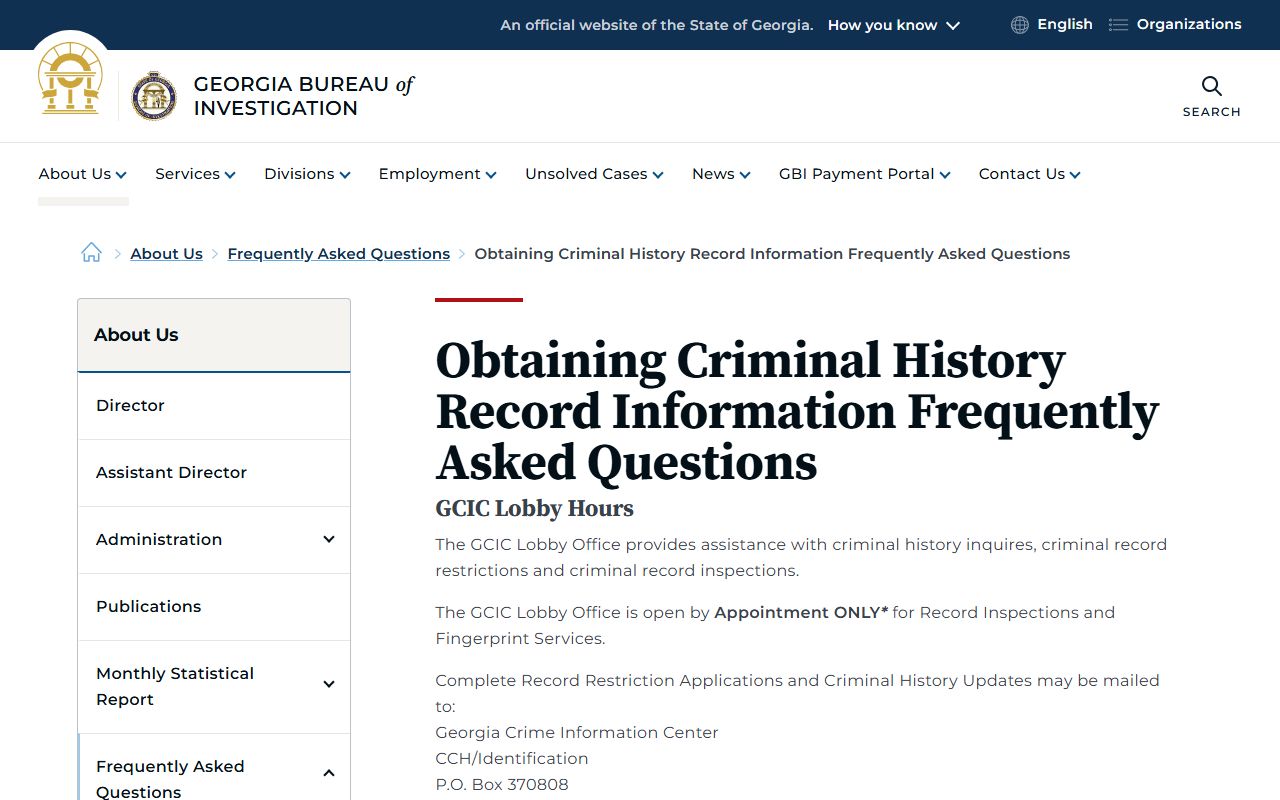
The GBI criminal history FAQ explains public felony conviction access requirements for criminal history information.
Charges vs. Convictions
A charge is an allegation or formal accusation. A conviction is a final finding or plea of guilt. Brantley County criminal court records can contain charges that were dismissed, amended, reduced, handled through a plea, or resolved after trial. A jail roster charge, warrant description, accusation, or indictment should not be read as the same thing as a conviction unless the court file shows a guilty plea, guilty verdict, or other conviction disposition.
| Charge | Conviction | |
|---|---|---|
| Meaning | An accusation, warrant-based allegation, indictment count, or filed criminal count. | A final guilty outcome by plea or verdict. |
| Where It Appears | Booking records, warrant records, accusations, indictments, and docket entries. | Disposition, judgment, sentence, probation, and criminal history records where legally reportable. |
| What To Verify | Whether the charge was filed, amended, dismissed, or transferred. | Certified disposition, sentence order, and any restriction or sealing status. |
DA and Public Defender Roles
Brantley County is in the Waycross Judicial Circuit. The First Judicial Administrative District source identifies Marilyn Bennett as district attorney for the Waycross Judicial Circuit, 306 Albany Avenue, Waycross, GA 31501, phone 912-287-4395, fax 912-287-4399. The same circuit source lists Joshua Larkey as public defender, and the Georgia Public Defender Council identifies the Waycross Judicial Circuit as serving Bacon, Brantley, Charlton, Coffee, Pierce, and Ware counties.
Law enforcement arrests and books. The prosecutor decides formal prosecution and charging documents in Superior Court. The court maintains the case file. The public defender process is for a defendant who cannot afford counsel and should be confirmed through the court or public defender process, including eligibility forms and the next court date. Victim services, diversion, and prosecution policies should be verified through the district attorney because no Brantley-specific DA program page was located in the research.
The U.S. Attorney for the Southern District of Georgia is a federal prosecutor source, separate from the Waycross Judicial Circuit district attorney.
Sealed vs. Expunged Records
Georgia research emphasizes record restriction rather than a simple public idea of expungement. O.C.G.A. 35-3-37 allows restriction of certain criminal history records for non-criminal justice purposes when the legal criteria are met. GBI says arrests after July 1, 2013 do not use a GBI application process; the person should contact the prosecutor. For arrests before July 1, 2013, GBI says the person must apply at the arresting agency. Eligibility is fact-specific.
| Sealed or Restricted | Expunged in Common Speech | |
|---|---|---|
| Georgia usage | Record restriction limits public access for qualifying criminal history records. | Often used casually, but Georgia commonly uses restriction rather than destruction. |
| Visibility | Public access may be limited, and court or agency access may remain. | Do not assume the record is destroyed unless the court or agency confirms the legal effect. |
| Practical path | Gather arrest date, agency, case number, disposition, and certified disposition. | Ask the arresting agency, prosecutor, and court where the case was filed what process applies. |
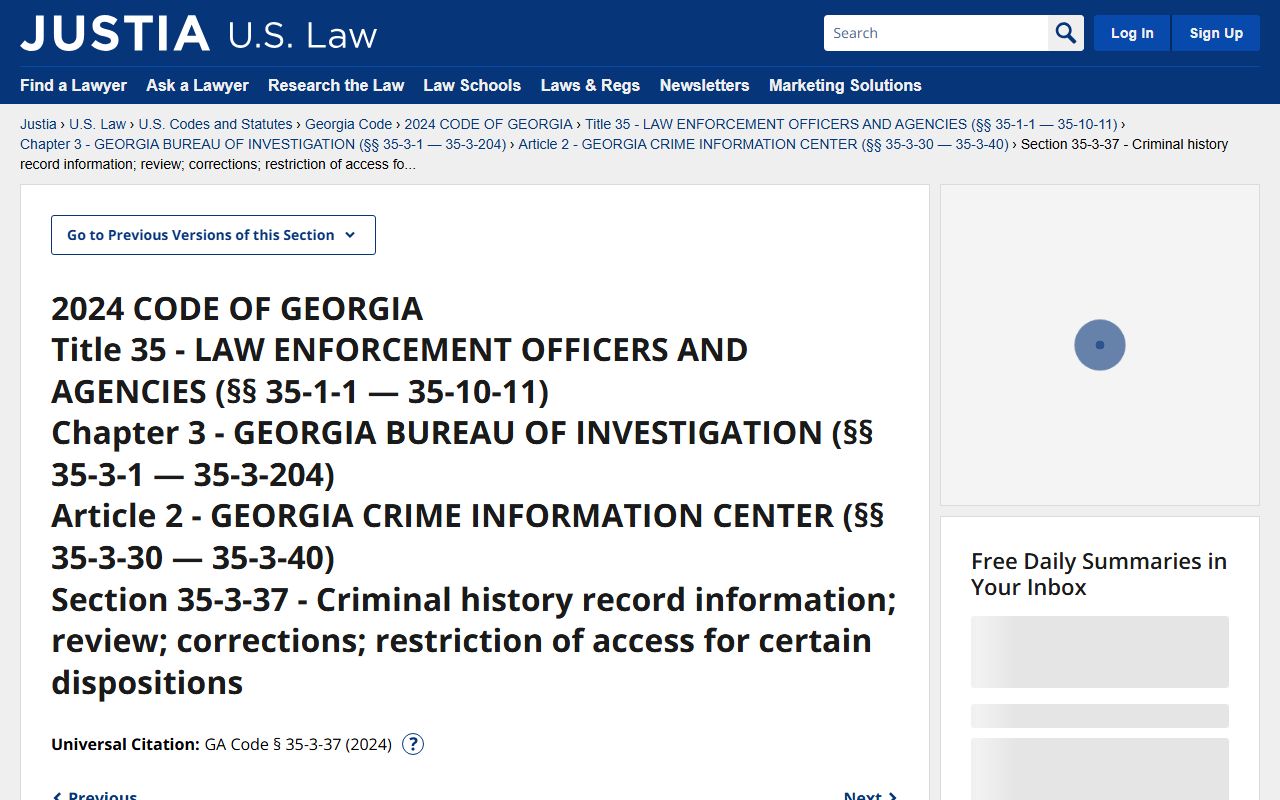
O.C.G.A. 35-3-37 is the Georgia criminal history restriction statute cited in the research.
Public Access to Criminal Court Records
Georgia public records are broadly presumed open under O.C.G.A. 50-18-70, and O.C.G.A. 50-18-71 addresses inspection, copies, timing, and lawful costs. Criminal court files can also be governed by court rules, sealing orders, restriction statutes, juvenile confidentiality, active-investigation limits, and redaction duties. Uniform Superior Court Rule 21 covers limitation of access to court files, while Rule 36.17 covers omission and redaction of sensitive identifiers.
Key Statutes:
O.C.G.A. 50-18-70 - Georgia public records are broadly presumed open unless an exemption or restriction applies.
O.C.G.A. 35-3-37 - Georgia record restriction rules can limit access to qualifying criminal history information.
Background Check Considerations
A Brantley criminal court record is not the same as a commercial background check or a statewide criminal history report. The county directory places a $25 background-check item under the 911 office entry, requiring a money order and two forms of ID, one with photo. That research item should not be confused with court-record copy fees, which were not located in Brantley official sources. For an official court outcome, ask the court for a certified disposition.
Important: Court records should not be used for FCRA-regulated decisions unless obtained and handled through a legally compliant consumer-reporting process.
Restricted Criminal Court Records in Brantley County
Restricted criminal court records include juvenile matters, sealed cases, sealed warrants, active investigative materials, protected addresses, minor information, victim-sensitive information, and records restricted under Georgia criminal history law. Adoption and mental-health records are not ordinary criminal court searches and are restricted for separate reasons. A person seeking access should gather the arrest date, agency, case number, court, disposition, and any proof of party status or court order before contacting the clerk, prosecutor, or arresting agency.